



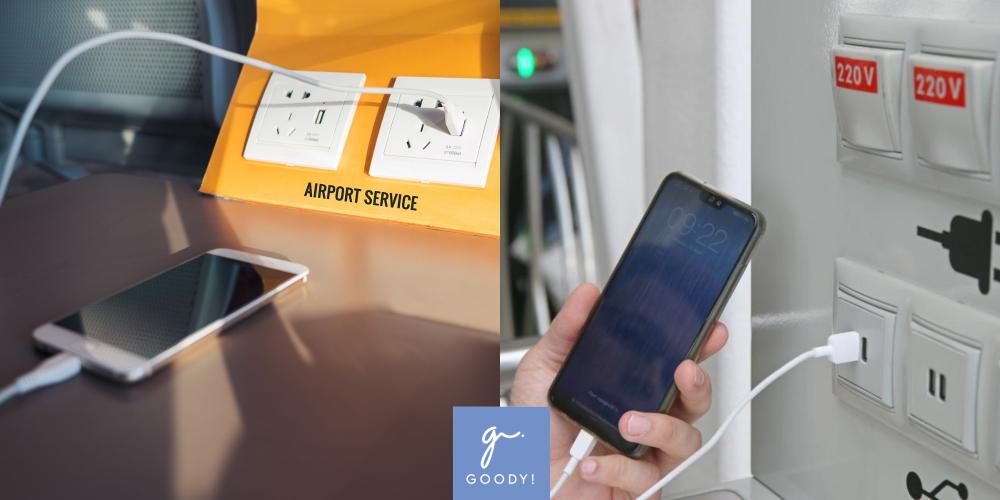

Your phone battery is at 5%, you're nowhere near home, and then you spot a public USB charging port. It looks like the perfect solution.
But before you plug in, think twice.
Public charging ports can be convenient, but they may also create cybersecurity and privacy risks that many people don't consider. Here's why using your own charger or power bank is generally the safer choice.
USB Ports Can Carry More Than Power
A USB connection isn't necessarily just an electricity connection. USB can also transmit data.
When you connect your phone to an unfamiliar USB port, you're potentially creating a connection between your device and hardware you don't control. Depending on how the connection is configured, this could create opportunities for unwanted data access or other security issues.
Beware Of "Juice Jacking"
One concern associated with compromised USB charging stations is known as juice jacking.
The basic idea is that a malicious or modified charging setup could potentially be used to access data or deliver malicious software rather than simply charging your device.
This doesn't mean every public charging port is dangerous. The problem is that you usually have no way of knowing whether a particular port has been tampered with.
Your Charging Cable Doesn't Remove The Risk
You might think you're safe because you're using your own charging cable.
However, many USB cables are capable of transferring both power and data. Connecting your personal cable to an unknown USB port can still establish a data connection.
That's why using your own wall adapter with a normal electrical outlet is generally a safer option.
Don't Automatically Tap "Allow"
Sometimes your phone may display a prompt after connecting to another device, asking you to trust the connection, allow access or transfer data.
Don't automatically approve these requests simply because you're trying to charge your phone.
If you weren't expecting a data connection, stop and consider why the prompt appeared.
Public Charging Stations Can Be Tampered With
A charging port at an airport, shopping centre, café or other public location may look completely legitimate.
But unless you control the hardware, you can't easily verify what is behind that USB connection or whether it has been modified.
The risk is not necessarily obvious from the outside.
Your Phone Contains A Lot Of Personal Information
Your smartphone may contain access to your email, social media accounts, photos, banking apps, work documents and private conversations.
That makes your phone much more valuable than simply a device that needs charging.
Putting all of that information at unnecessary risk just to gain a few minutes of battery may not be worth it.
What Should You Use Instead?
The safest approach is simple: bring your own power source.
A power bank is one of the easiest solutions, especially when travelling or spending long hours outside.
Another option is to use your own charging adapter with a standard electrical outlet. This allows you to charge without directly connecting your phone to an unfamiliar USB data port.
Some people also use USB data blockers, which are designed to allow electrical power while blocking data connections.
A Low Battery Is Better Than A Risky Connection

Public charging isn't automatically dangerous, and there's no need to panic if you've used one before.
However, when safer alternatives are readily available, it's worth choosing them.
Your battery might be dying, but that doesn't mean your phone's security should too.
A power bank may take up a little extra space in your bag, but when it comes to protecting your personal data, that small inconvenience can be well worth it.