



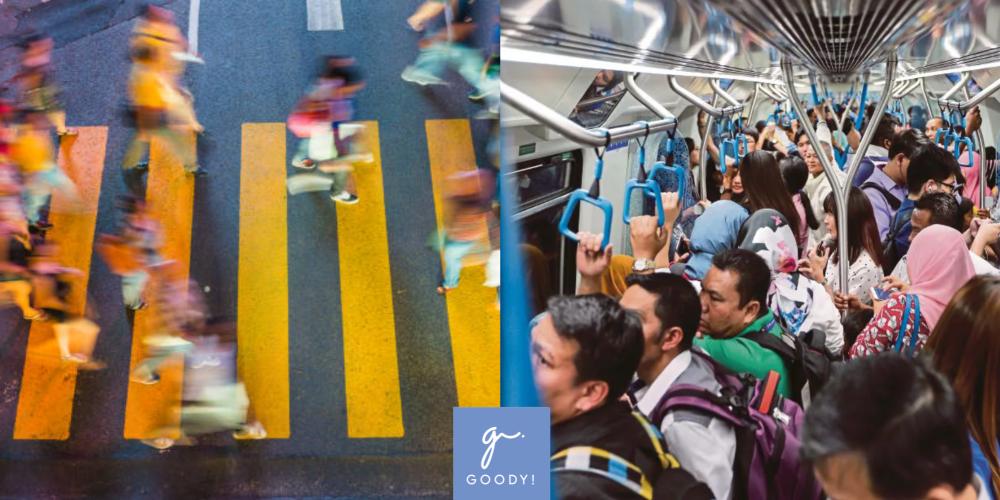

Have you ever caught yourself walking unusually fast... only to realise you're not actually late for anything?
Or finishing your lunch in 10 minutes because taking your time somehow feels wrong?
Or checking your phone every few minutes, convinced you've missed an important message?
If that sounds familiar, you're not alone. For many Malaysians, rushing has quietly become our default mode. Even when there's no deadline, no emergency, and nowhere urgent to be, we still feel like we're racing against the clock.
So why does this happen?
We Copy the Pace Around Us
Humans naturally mirror the behaviour of those around them. When everyone is walking quickly, driving aggressively, rushing through meals or constantly multitasking, we tend to do the same without even noticing.
Psychologists refer to this as social contagion the tendency to unconsciously adopt the habits, emotions and behaviours of the people around us. When the world moves fast, we often feel like we have to keep up.
We're Always "On"
Today's world rarely gives our brains a chance to switch off.
Work emails arrive after office hours. WhatsApp messages never stop. Social media feeds constantly refresh. News notifications compete for our attention every few minutes.
Even after the workday ends, our minds often stay in "work mode." Without a clear signal to slow down, our brains remain alert, making relaxation surprisingly difficult.
Productivity Has Become a Badge of Honour
Many people feel guilty when they're not being productive.
If we're not working, studying, replying to messages or ticking something off our to-do list, it can feel like we're wasting time.
Over time, we begin believing that rest is something we have to earn instead of something we naturally deserve. This mindset makes slowing down feel uncomfortable, even when we need it most.
City Life Trains Us to Hurry
For many Malaysians, daily life feels like a race.
We're rushing to catch the LRT, searching for parking at crowded malls, queueing for lunch before the crowd grows, or trying to beat traffic before it gets even worse.
Living in this constant cycle of urgency conditions our brains to stay in a hurry. Eventually, that feeling follows us everywhere even when we're simply browsing in a shopping mall or taking a weekend stroll.
Our Brain Gets Used to It
The more we rush, the more our brain accepts that pace as normal.
After weeks, months or even years of constantly moving fast, slowing down can actually feel strange.
That's why you might find yourself speed-walking through a shopping mall... despite having absolutely no destination in mind.
Your brain has simply learned that moving quickly is the default.
Slowing Down Isn't Laziness
Taking your time doesn't mean you're falling behind.
Sometimes, slowing down simply means:
Eating a meal without looking at your phone.
Going for a walk without constantly checking the time.
Sitting quietly for a few minutes without feeling guilty.
Enjoying a cup of kopi without thinking about what's next.
Not every moment needs to be productive.

Life isn't a competition to see who stays busiest. Sometimes, the healthiest thing you can do is slow down, be present, and give yourself permission to simply exist without rushing to the next task.