



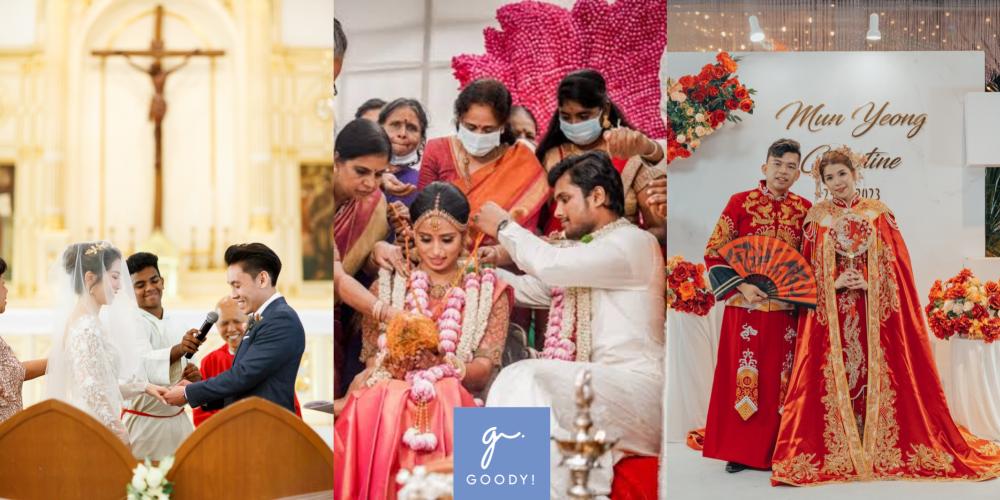

It Isn't Always Just About Picking A Date
When planning a wedding, many couples focus on finding the perfect venue, photographer, or dress. However, in many cultures, choosing when to get married can be just as important.
Certain months or periods are traditionally avoided due to religious beliefs, cultural customs, or long-standing traditions. These practices vary across communities, and not everyone follows them today.
Chinese Seventh Lunar Month
Many traditional Chinese families avoid holding weddings during the Seventh Lunar Month, which is commonly associated with the Hungry Ghost Festival.
According to Taoist folk beliefs, this is the period when spirits are believed to visit the world of the living. Because weddings symbolise new beginnings and good fortune, some families prefer to postpone ceremonies until after the month has passed.
That said, this is a traditional custom rather than a universal rule, and many Chinese couples still choose to get married during this period.
The Tamil Month Of Aadi
Some Tamil families also avoid weddings during Aadi, a month in the Tamil calendar that is closely associated with spiritual devotion.
During Aadi, many people dedicate their time to worshipping Goddess Amman, attending temple festivals, praying for their family's well-being, and honouring their ancestors.
Because of its strong religious significance, some South Indian communities traditionally regard it as an unsuitable time for weddings. However, this is largely a regional and cultural practice rather than a rule followed by all Hindus.
Catholic Wedding Dates
Some Catholic couples choose not to marry during certain liturgical seasons, although the exact practice depends on their local church.
Under the Catholic Church's general guidance:
Weddings are generally not celebrated on Good Friday and Holy Saturday.
Weddings may still be permitted during Lent or Advent, depending on the parish.
Individual dioceses and churches may have additional guidelines or restrictions.
These practices reflect the Church's emphasis on prayer, penance, and spiritual preparation during these sacred seasons.
Tradition Doesn't Decide A Marriage

Choosing to avoid a particular month does not determine whether a marriage will be successful.
For some couples, these traditions are deeply meaningful personal beliefs. Others observe them out of respect for their parents, grandparents, or religious communities. Meanwhile, many couples decide their wedding date based on practical considerations instead.
Ultimately, every culture has its own unique customs, and whether to follow them is a personal choice that varies from family to family.