




Every year, Chinese communities around the world observe the Hungry Ghost Festival, a tradition that has been passed down for centuries. While many people associate the festival with ghosts, offerings and superstitions, its origins are deeply rooted in compassion, filial piety and remembrance.
In Malaysia, the festival has evolved into a vibrant cultural event that combines religious traditions, community gatherings and performances, while continuing to honour ancestors and those who have passed away.
What Is the Hungry Ghost Festival?
The Hungry Ghost Festival is one of the most significant festivals celebrated by Chinese communities worldwide. It is known as the Zhongyuan Festival in Taoism and the Yulan Festival in Buddhism.
The festival falls on the 15th day of the seventh lunar month, during what is commonly known as Ghost Month. According to traditional belief, the gates of the underworld open during this period, allowing spirits to visit the human world.
Families prepare food offerings, burn incense, say prayers and perform rituals to honour their ancestors while also making offerings for wandering spirits believed to have no descendants to care for them.
Why Is It Called the Hungry Ghost Festival?
The festival takes its name from the belief in hungry ghosts, spirits that, according to Buddhist teachings, suffer because of greed, attachment or negative karma accumulated during their previous lives.
These spirits are often depicted with enormous stomachs but tiny throats, leaving them permanently hungry yet unable to satisfy their hunger.
To ease their suffering, families prepare food offerings and prayers. These acts are believed to comfort wandering spirits while also generating merit for deceased loved ones.
How Did the Festival Begin? (Buddhist Origins)
The Hungry Ghost Festival has both Buddhist and Taoist roots.
In Buddhism, its origins are traced to the Ullambana Sutra, which tells the story of Maudgalyayana, also known as Mulian.
After gaining supernatural abilities, Mulian discovered that his late mother had been reborn as a hungry ghost because of her past actions. When he tried to feed her, the food transformed into flames before she could eat it.
Seeking guidance, he turned to the Buddha, who instructed him to make offerings to the monastic community. Through these acts of generosity and merit, his mother was finally released from her suffering.
The story became a powerful symbol of filial piety, reminding people to honour and care for their parents and ancestors even after death.
How Did the Festival Begin? (Taoist Origins)
Around the same period, Taoism developed a similar observance.
According to Taoist belief, Di Guan Dadi, also known as the Earth Official, descends to Earth during the seventh lunar month to pardon sins and judge the deeds of both the living and the dead.
People would burn incense, make offerings and pray for the well-being of their ancestors and wandering spirits.
Over time, these Taoist beliefs merged with Buddhist teachings and Chinese folk religion, creating the Hungry Ghost Festival celebrated today.
How Did It Come to Malaysia?
The Hungry Ghost Festival was introduced to Malaysia during the 19th and early 20th centuries, when large numbers of Chinese immigrants arrived in British Malaya to work in tin mines, rubber plantations and trading settlements.
Many workers died far from their hometowns and had no family nearby to perform ancestral rites. According to traditional beliefs, these individuals could become wandering spirits.
To honour them, Chinese communities began organising public prayers, communal offerings and religious ceremonies. These practices gradually evolved into the Malaysian version of the Hungry Ghost Festival.
The Malaysian Tradition
As Chinese communities expanded across Penang, Melaka, Kuala Lumpur, Ipoh and Johor, the festival became an important community event.
Neighbourhood associations, clan organisations, businesses and Phor Thor committees started organising annual ceremonies that included prayers, food offerings and cultural performances.
Many of these committees continue preserving the tradition today, ensuring that younger generations remain connected to their cultural heritage.
What Makes Malaysia's Celebration Unique?
One of the most distinctive features of the Malaysian Hungry Ghost Festival is the construction of giant paper effigies of Tai Su Yeah, who is widely regarded as the King of Hades or the guardian of wandering spirits.
Some of these towering figures can exceed 30 feet in height before being ceremonially burned at the end of Ghost Month.
Throughout the country, it is also common to see:
Roadside altars
Community prayer ceremonies
Giant incense sticks
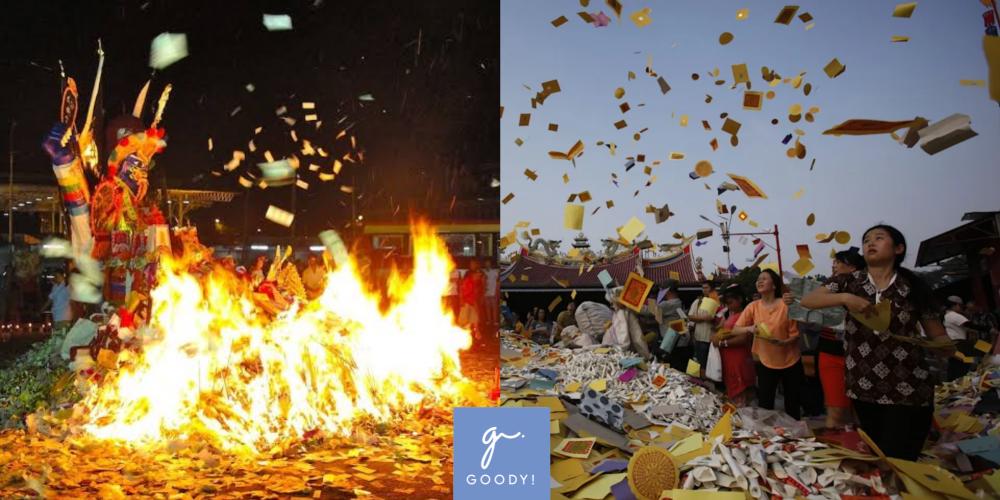
Burning of joss paper
Elaborate food offerings for both ancestors and wandering spirits
These public displays have become one of the festival's most recognisable traditions in Malaysia.
Getai and Chinese Opera Performances
Traditionally, Chinese opera performances were staged as offerings to Tai Su Yeah and wandering spirits.
This is why the front row of seats is intentionally left empty, as it is believed to be reserved for unseen spiritual guests.
As younger generations became less interested in traditional opera, many communities introduced Getai performances featuring pop music, comedy, dancing and modern entertainment.
Today, many Malaysian Hungry Ghost Festival celebrations feature both Chinese opera and Getai, blending tradition with contemporary culture.
Why Do People Burn Joss Paper?
Burning joss paper is one of the festival's most recognisable rituals.
Families burn symbolic offerings that may include paper representations of:
Money
Clothing
Houses
Cars
Household items
Other everyday necessities
These items are not intended as literal gifts but symbolise sending comfort and necessities to deceased loved ones in the afterlife, according to traditional beliefs.
More Than Just Ghost Stories

Although Ghost Month is often surrounded by supernatural stories and popular taboos, the festival's deeper meaning extends far beyond ghosts.
At its heart, the Hungry Ghost Festival is about:
Honouring ancestors and preserving family traditions.
Showing filial piety, gratitude and respect for previous generations.
Extending generosity and compassion to wandering spirits believed to have no descendants.
Preserving centuries-old cultural and religious traditions.
For many Malaysian Chinese families, the Hungry Ghost Festival is ultimately a time of remembrance, compassion, generosity and community a tradition that continues to connect generations while keeping an important part of their cultural heritage alive.