


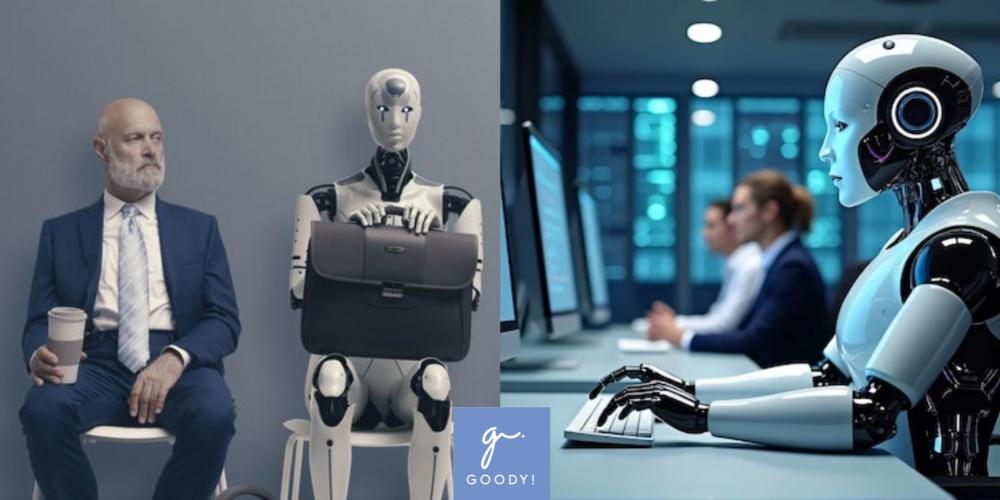

Artificial intelligence (AI) has become one of the most talked-about technologies in recent years. From writing emails and creating images to analyzing data and answering customer questions, AI is transforming how businesses operate across almost every industry.
As AI continues to evolve, one question keeps coming up: Will AI replace human jobs?
The answer is more complex than a simple yes or no. While AI is changing the workplace faster than ever before, it's not replacing people in the way many imagine. Instead, it's changing the nature of work itself.
AI Replaces Tasks, Not Entire Jobs
One of the biggest misconceptions about AI is that it will completely replace entire professions. In reality, AI is far better at handling repetitive, rule-based tasks than performing every responsibility a human employee has.
For example, AI can draft emails, summarize meeting notes, organize data, or answer common customer questions. However, humans are still needed to make strategic decisions, solve unexpected problems, build relationships, and exercise judgment.
Rather than replacing complete jobs, AI is removing repetitive parts of those jobs, allowing people to focus on more meaningful and complex work.
Speed Is Becoming a Competitive Advantage
AI has dramatically increased the speed at which many tasks can be completed.
Work that once took several hours such as creating reports, researching information, generating presentations, or writing first draft scan now be done within minutes using AI tools.
As a result, employers are beginning to value professionals who know how to work efficiently with AI. The ability to use AI responsibly, verify its accuracy, and improve its output is becoming a valuable workplace skill.
In today's workforce, productivity is no longer just about working harder it's also about working smarter.
Human Skills Matter More Than Ever
As AI becomes more capable, uniquely human qualities become even more valuable.
Skills such as empathy, creativity, emotional intelligence, leadership, negotiation, ethical decision-making, and critical thinking remain difficult for AI to replicate.
Customers still prefer genuine human interactions during difficult situations. Teams still need leaders who can motivate people. Businesses still depend on creative minds to develop innovative ideas.
Technology may become smarter, but human connection continues to be irreplaceable.
AI Is Creating New Career Opportunities
While some tasks are becoming automated, AI is also creating entirely new careers.
Roles such as AI Prompt Engineer, AI Trainer, AI Product Manager, AI Ethics Specialist, Machine Learning Operations (MLOps) Engineer, and Automation Consultant have emerged as organizations adopt AI technologies.
Many companies are also hiring professionals who can integrate AI into existing workflows, train employees to use AI effectively, and ensure AI systems are used responsibly.
History has shown that every major technological revolution creates new opportunities alongside disruption, and AI is no exception.
Every Industry Is Being Transformed
You don't have to work in technology to experience AI's impact.
Healthcare professionals use AI to assist with medical imaging and diagnosis.
Teachers use AI to create lesson plans and personalize learning materials.
Marketers use AI to generate content ideas, analyze campaigns, and understand customer behavior.
Financial institutions rely on AI to detect fraud and assess risks.
Retail businesses use AI to forecast demand, recommend products, and improve customer experiences.
Manufacturing companies automate production and monitor equipment using AI-powered systems.
Regardless of your profession, AI is likely to become part of your daily work.
Continuous Learning Is the New Job Security
In the past, earning a degree was often enough to build a long-term career.
Today, technology changes so quickly that continuous learning has become essential.
Professionals who regularly update their skills, explore new tools, and stay curious are better prepared for changing workplace demands.
Learning AI doesn't necessarily mean becoming a programmer. Even understanding how AI can improve your daily tasks can make you more competitive in your field.
Those who embrace lifelong learning will have a significant advantage in the future job market.
The Biggest Risk Isn't AI
Many people worry that AI will take their jobs.
However, the greater risk may be refusing to adapt.
Throughout history, workers who embraced new technologies from computers to the internet were often better positioned than those who resisted change.
AI should be viewed as a powerful assistant rather than a replacement. Professionals who combine human expertise with AI tools can often accomplish more, make better decisions, and create greater value.
Final Thoughts

The future of work isn't a battle between humans and AI.
Instead, it's about collaboration.
AI excels at processing information, automating repetitive tasks, and increasing efficiency. Humans excel at creativity, empathy, judgment, communication, and leadership.
The professionals who thrive in the coming years won't necessarily be those competing against AI but those who know how to work alongside it.
In the end, AI won't replace people. More often, people who know how to use AI effectively will have an advantage over those who don't.